Shaping Hot Dog Buns

For hot dog or hamburger buns Brioche dough from The New Artisan Bread in Five Minutes a Day or some other enriched white dough that make up a lighter bun. Use any dough that you like and form as below. Read More
For hot dog or hamburger buns Brioche dough from The New Artisan Bread in Five Minutes a Day or some other enriched white dough that make up a lighter bun. Use any dough that you like and form as below. Read More
The rye flour available in supermarkets is delicious, but it’s whole-grain, and that’s not what I grew up with as a kid. Those rye breads from yesteryear were made from “medium” rye (bran and germ-depleted), and the result was lighter. Bob’s Red Mill and Hodgson Mills rye flours make great breads, but you have to go light with them to re-create what we used to get years ago.
I figured that wasn’t what people were looking for in the books, so I went a little heavier in the recipes we published in Artisan Bread in Five Minutes a Day, and of course, with much more whole grain in Healthy Bread in Five Minutes a Day. In this video, I’m talking about using relatively little of the Bob’s or the Hodgson product. Follow the recipe at our Back to Basics post, but substitute 1/2 cup of rye flour (Bob’s or Hodgson Mills) for 1/2 cup of unbleached all-purpose (in the book, the swap is for a full cup). Then, add 1 1/2 tablespoons caraway seeds to the initial mix. Everything else is the same (in Artisan Bread in Five, I used a whole cup of rye flour, and it’s also a great result– just different).
To clarify a couple of things from the video: I said to turn and shape the loaf pulling around on three sides– I meant “on four sides;” turn the loaf in quadrants and pull the top around to the bottom to create a “cloak.” And of course, rest the loaf on on cornmeal or parchment, not on the board where you shaped it or you’d have to lift the fully proofed loaf, which isn’t a good idea.
20 to 30 minutes before baking time, preheat a baking stone to 450 degrees F (230 degrees C), with a metal broiler tray on any other shelf that won’t interfere with rising bread (do not use glass for this purpose or it will shatter). Using a pastry brush, paint the loaf with water and sprinkle with more caraway seeds.
Slash at least 1/2-inch deep with a serrated bread knife, making perpendicular, not angled cuts, as in the video. Slide loaf onto the baking stone and pour 1 cup of hot water into the broiler tray and close the oven door. Bake for about 30 minutes or until golden brown.
Allow to cool before slicing, and enjoy!
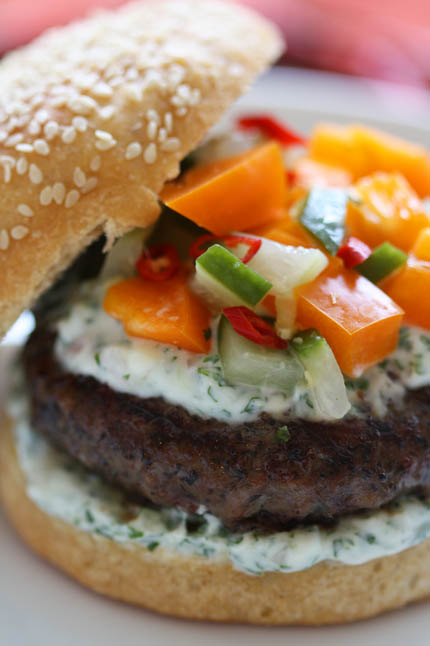
It’s burger time! Many of you have asked for a bun to match your favorite patty. If you like burgers on a light, vaguely sweet brioche bun, topped with sesame seeds and loaded up with condiments–this is the one for you. Others have asked for a bun sturdy enough to hold up to a mega-burger. No matter what dough you choose to use these directions will get you the right shape.
This burger is so full of flavor and a touch of heat that you don’t need anything else with it, but in case you are like me and want it dripping with a cilantro-yogurt sauce and a bit of crunchy salad for texture… Read More
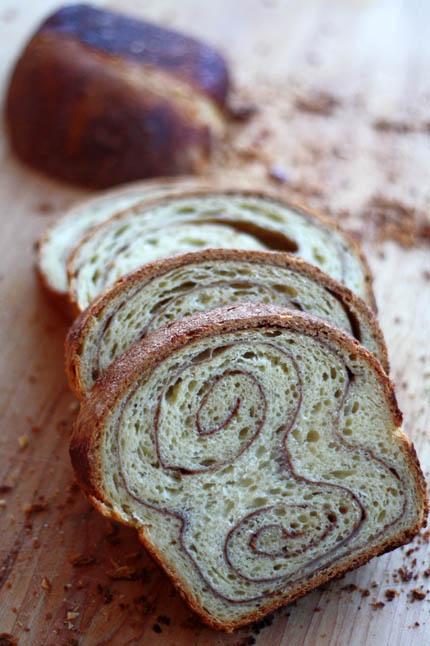
It is Sunday morning, the sun is shining, the snow is finally melting and I’m as happy as could be! Seems the perfect time to have a lavish, albeit easy, breakfast. Last night I took out my bucket of brioche dough, rolled in some cinnamon sugar and baked a gorgeous swirly bread. This morning I sliced it, soaked it in custard and made it into sublime French toast. Nothing better than that and with a bucket of dough on hand it is quick and easy.
Here are some other great breakfast ideas from our books/website:
So many of you have asked for close-up video of someone shaping a loaf (what we called “gluten-cloaking” in the first book). Doing this quick shaping step is the same with whole grain doughs, but the feel is different– it isn’t quite as resilient.
But as you can see in the video, it’s basically the same process with this 100% whole wheat dough (the honey-enriched variation on page 92 of The New Healthy Bread in Five Minute a Day).
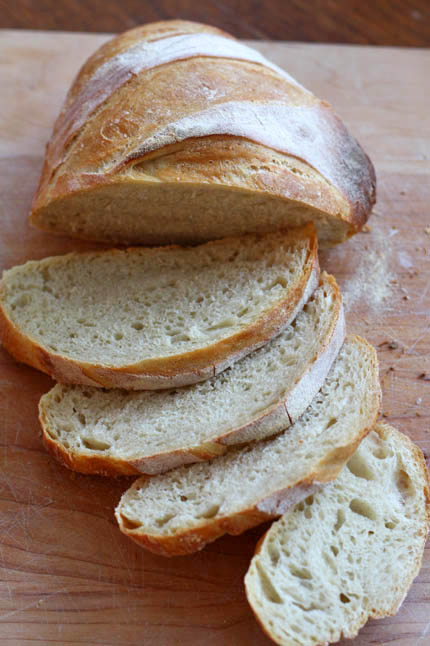
Note that there is an updated version of this post, click here to view.
Recently we have seen lots of new readers on the website who are asking wonderful questions about how to perfect their loaves. First I’d like to say welcome to the site and thank you for trying the bread. As I bake through the basic Master recipe from ABin5 I will try to answer some of the most frequently asked questions and also introduce you to a few new pieces of equipment I’ve recently started to use that make the whole experience just a little easier. The goal is to create a large batch of dough that stores in the refrigerator for up to two weeks. That’s why our method saves you so much time– all the mixing and prep is divided over four one-pound loaves.
Our two books were temporarily unavailable from Amazon.com, but everything appears to be back to normal now. You can get the books again, just click on the links:
Artisan Bread in Five Minutes a Day
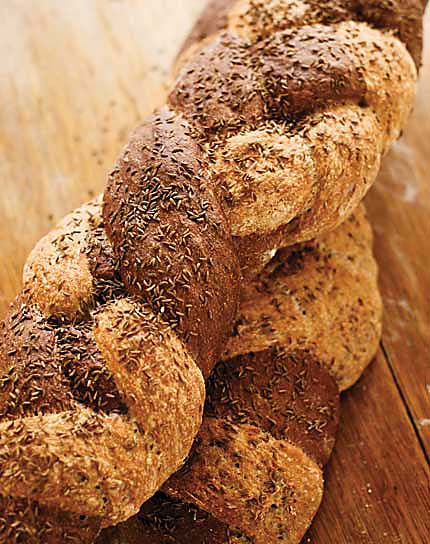
The “black and white” pumpernickel/rye braid is a New York specialty that brings back fond memories for me. Pumpernickel is a kind of rye, and we included a whole grain version in Healthy Bread in Five Minutes a Day, which also has a rustic Bavarian-Style pumpernickel based on the same dough. Let’s throw together the recipe for this healthy and hearty dough, plus talk about a new feature on our website: The FAQs–Frequently Asked Questions tab… Read More
As your dough stores in the refrigerator, it might develop a uniform gray discoloration and liquid on its surface or at the bottom of the bucket. This is not mold and can be safely ignored (scroll down to the bottom of this page for instructions on how to recognize mold). Here are ways to deal with dough that’s developed gray color and liquid on top.
If your dough has a leathery gray top and liquid on the bottom:
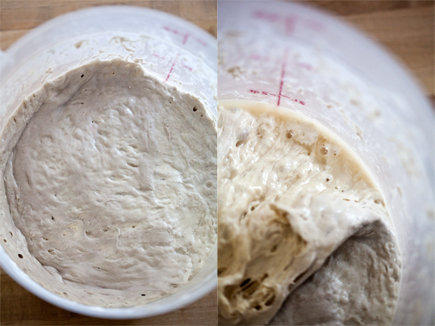
If you have a bucket of dough that was untouched for several days, it may develop a gray cast to it. As we mentioned this is safe to consume, but it may have a tough, almost leathery texture (a “skin”). If the dough has become hard and leathery, that suggests that there’s too much air-space in your container (or that it isn’t sealed well enough). You can decrease the effect of air that gets into the container by transferring into smaller containers as the dough is getting used up.
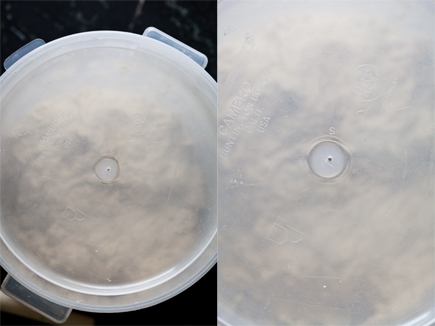
Another way to prevent too much air from getting into your bucket is to poke a small hole in the lid, that way you can snap it shut, but still let the gases escape.
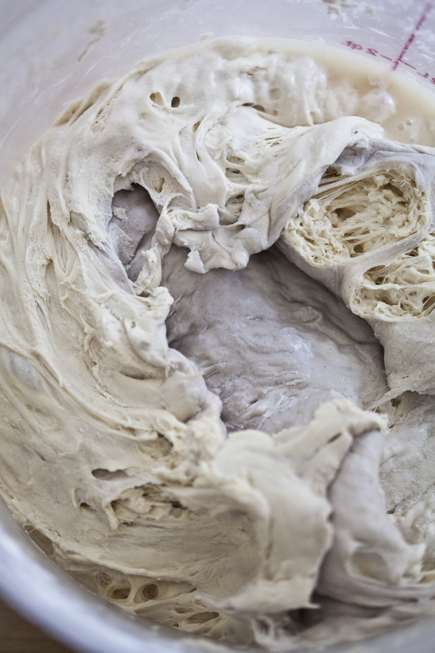
You can simply ignore the gray portion of the dough and form it into a loaf, but you will likely end up with a streak of gray in your dough and that area may be dense. If you’d prefer not to use the gray part, the dough underneath will be creamy in color and full of flavor, so you’ll want to use it. Just peel off or scoop up, depending on the texture, the gray portion of the dough.
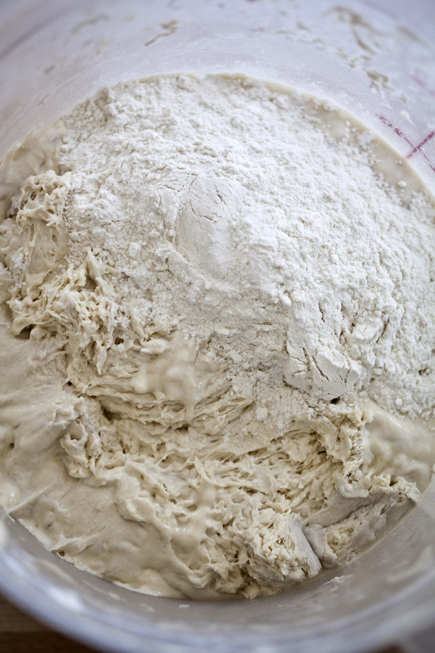
If you find liquid under the dough, which can happen if your dough has sat untouched for several days, just add enough flour to absorb that liquid and get your dough back to the consistency of the original dough.
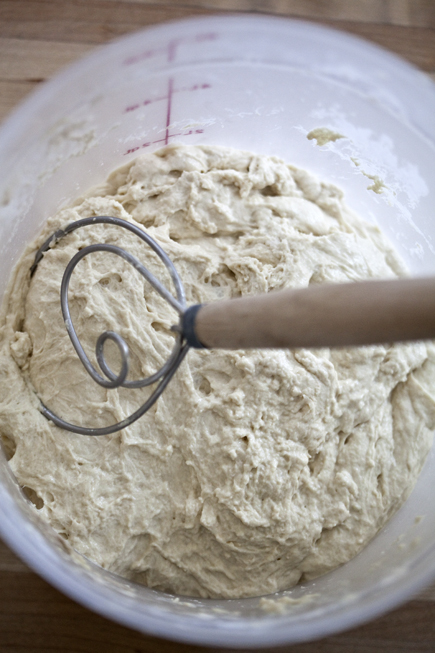
Mix in the flour and let it sit until the new flour absorbs all the liquid.
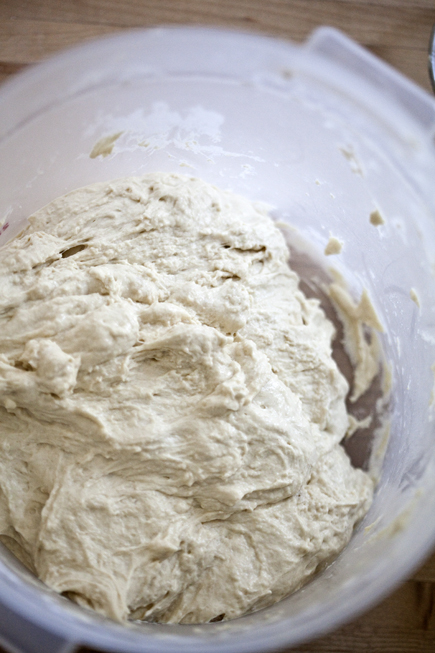
It is now ready to use to make bread. Click here to see Fresh Bread made from Older Dough. The dough may spread more than usual, but you will get a lovely loaf that is full of flavor.
If you only have a tiny bit of dough left, even if it is gray and liquidy, you can incorporate it into your next batch of dough to jump-start the flavor in your next batch: Click here to find out how.
*Is it mold? If you see patchy light or dark areas on your dough, whether smooth or fuzzy, that could be mold and the dough should be discarded. You are not likely to see mold if you follow our directions for maximum storage life, and keep the dough in the refrigerator.
More in The New Artisan Bread in Five Minutes a Day, and our other books.
Note: BreadIn5.com is reader supported. When you buy through links on the site, BreadIn5 LLC earns commissions.
Well, no, not here on this website. But you can post pictures to Flickr by joining the Flickr group https://www.flickr.com/groups/artisanbreadinfive/ and upload pictures there. Then you can post the link to your picture in any of the “Comments” fields here on the site.
Look forward to seeing your shots!
Note: BreadIn5.com is reader supported. When you buy through links on the site, BreadIn5 LLC earns commissions.