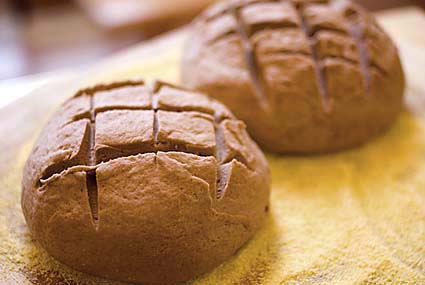
Here’s a fantastic Italian Tomato Soup (Pappa al Pomodoro), which is actually a bread soup usually made from stale Peasant Bread (see page 46). But we decided to use the dough from the Whole Wheat Sandwich Bread on page 78 instead, forming it into rustic round loaves. That’s them just after being slashed, above. Because they’re free form loaves rather than loaf pan breads as in the recipe, you can bake at 425 degrees F, right on the baking stone for about 35 minutes (use steam from a broiler pan to get a great crust). Read More
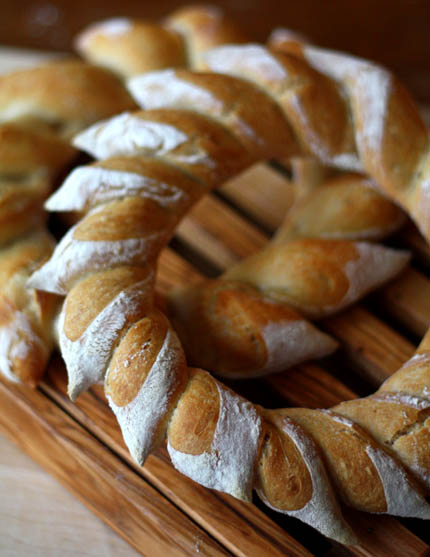
‘Tis the season for all things festive! This holiday wreath bread is a very simple loaf that is gorgeous and will be the perfect addition to your holiday meal. Despite its impressive appearance I promise it’s easy to make. Check out the video from WMAR Channel 2 in Baltimore (the ABC affiliate) for a demo (click here to view).
Now for the Holiday Wreath Bread, and some Holiday gift suggestions: Read More
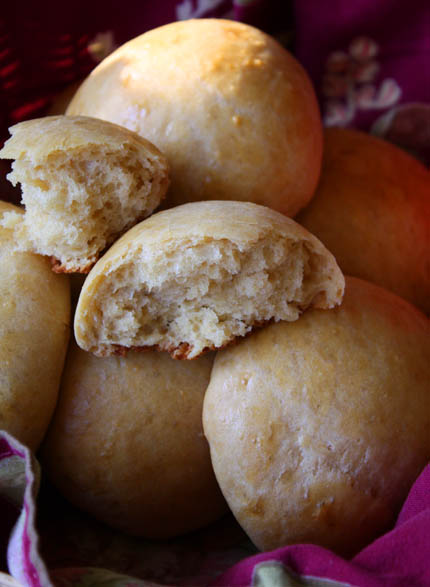
During the past week we’ve had several questions about making our various doughs into buns. These tiny little loaves are the traditional shape for the holidays and can be easily made from any of our doughs. Here is how: Read More
Read on for a discussion of how to roll things into stored dough. It works the same whether you’re rolling in dried fruit, nuts, or even herbs…
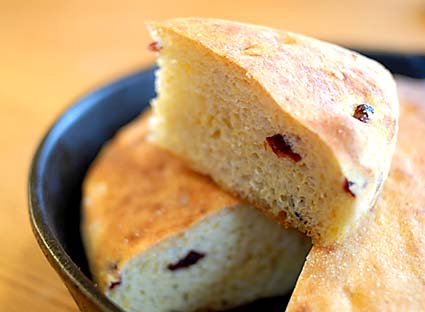
Before I launch into our Thanksgiving Cranberry Corn Bread, Zoe and I want to thank everyone who posted their bread stories into our blog this past week. Hearing other people’s stories about their bread has been the best part of doing this website. Kelly (see the post from 11/11) is the first winner of the signed book. Kelly does not use her bread machine and loves giving bread away. Bravo. Beth, who posted on 11/14, is the 2nd winner– a working mom with an active blog of her own. We’ll be in touch with both of you.
This week’s bread is a yeasted corn bread adapted for American Thanksgiving but based on the Portuguese Broa style (page 146 of The New Artisan Bread in Five Minutes a Day). It’s basically our regular Master Recipe, but with 1 1/2 cups of all-purpose flour taken out and replaced with an equal amount of cornmeal.
Click on the links to read… thousands of people have come to our site because of the Seattle article and the link to it from SmartBrief. Smartbrief is a wonderful thing to subscribe to, even if you’re not a food professional; you can do that from the 2nd link. And if you’re curious about our book’s other reviews, click here.—Jeff
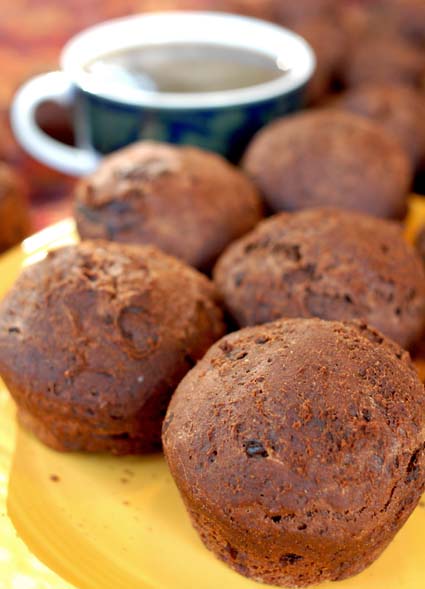
OK, I know, these aren’t really cupcakes because they aren’t cake! They’re yeasted, so they’re actually super-mini chocolate breads based on Zoe’s chocolate bread in our book(page 211). I wanted you to get a sense of how versatile this method really is— need a quick kid treat? If you’ve got chocolate dough in the freezer you are set.
I didn’t frost them because they were perfect without it– maybe a little cherry jam if you really want something with them. Just mix up a full or half-batch of the chocolate dough, and then break off little pieces and load them into muffin tins, or mini-muffin tins(the picture above has both). Be careful not to overbake these little guys; the regular size are done in no more than 20 minutes at 350 degrees F (175 degrees C), and the minis are done in 15 minutes.
This is all a welcome distraction from writing (I ate about four of these this AM!)… our new book’s manuscript is due 1/3/09, with likely release 12/09. Wish us luck, and follow our new book’s progress on Twitter!
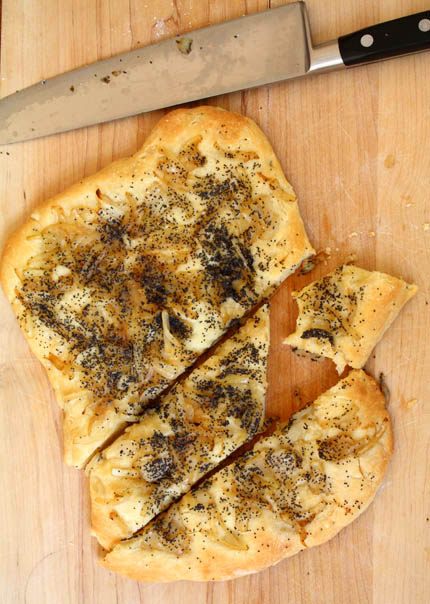
This is a flat bread made with an enriched dough, topped with sautéed onions, sprinkled with poppy seeds and drizzled in olive oil. Okay, so many many years ago when the pletztel was in the height of fashion, it was done with dough slightly less decadent than brioche and the oil used was less exotic than extra virgin olive oil, but it was still superb. It was a bread brought to the states from Eastern Europe and was easily found in Jewish bakeries all across the country, until about 25+ years ago. I blame the rise and global domination of the bagel for the demise of this fabulous bread, along with its cousin the bialy. Once again people are craving great bread, demanding it in fact and they need to know about making the pletzel: Read More
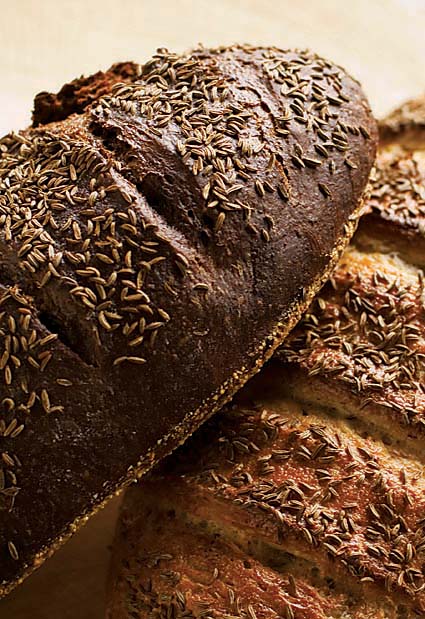
I’ve been getting a lot of questions about the caramel color, a brown and slightly bitter powder made by over-caramelizing sugar) that we call for in the pumpernickel bread recipe on page 67 of the book. It’s hard to find in local stores, and it’s not an absolute requirement for the bread, but most U.S. consumers will miss it if it’s left out.
Yes, caramel color can be made at home, but not as a powder– what you make will be a liquid that is added to recipes; you should decrease the liquid a bit to account for the extra. Here’s what I’ve done at home (it won’t be quite as dark a result as powdered caramel color): Put 3 tablespoons sugar and 1 tablespoon water into a saucepan. Melt the sugar over a low flame, then increase heat to medium-high, cover, and bring to a boil for 2 minutes. Add a pinch of cream of tartar and continue to boil uncovered until the mixture becomes very dark. Remove from heat and allow to cool partially. Very carefully, add a quarter cup of boiling water to the pan (it may sputter and water may jump out of the pan so wear gloves and keep your face away from it). Dissolve the caramelized sugar and cool to room temp. Use about a quarter-cup of this mixture in place of commercial caramel color powder in our Pumpernickel recipe on page 67.
If you use liquid caramel coloring like this, you need to add extra flour to make up for it– about twice the volume of flour as liquid. Otherwise the dough will be too loose.
OK, so I rolled some ground anise, orange zest, and ground cardamom into some light rye dough (see page 65) and it was going to be a limpa loaf, the traditional Scandivian spiced rye, and I was going to use that dough for a class I taught Tuesday night. Never got to it. What to do?
Tonight it’s pizza topped with tomato, anchovies, fresh mozzarella, and cured black olives. I’m starting to think you can get away with anything if you keep an open mind. We all devoured it.
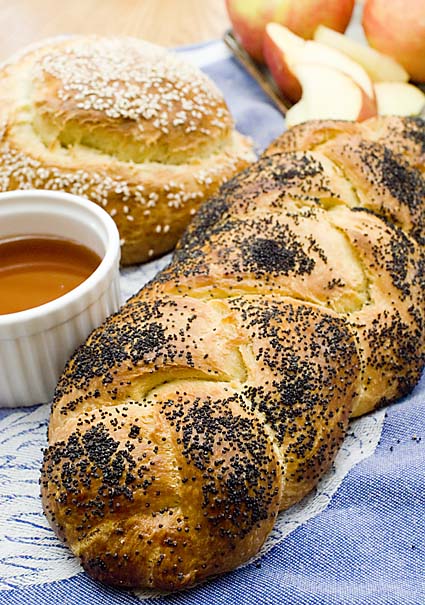
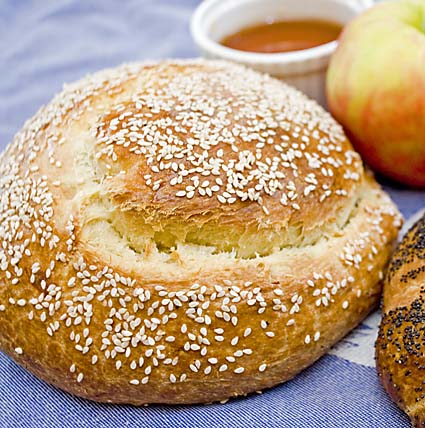
It’s Jewish New Year (tonight) and the traditional loaf, a round, turban-shaped one (round=continuity of life) took a back seat in this photo– so I decided to do a challah extravaganza and go through both shapes, which are easy once you see how they’re done. Here’s the turban from a little closer:
They’re both made from the same dough but the New Year’s turban always has raisins or other sweet fruit (to symbolize a sweet new year)– we’ll roll them into the dough so you don’t have to mix up a special one. Read More