Anadama Cornbread: inspiration from Henry David Thoreau’s “Walden” baking adventure
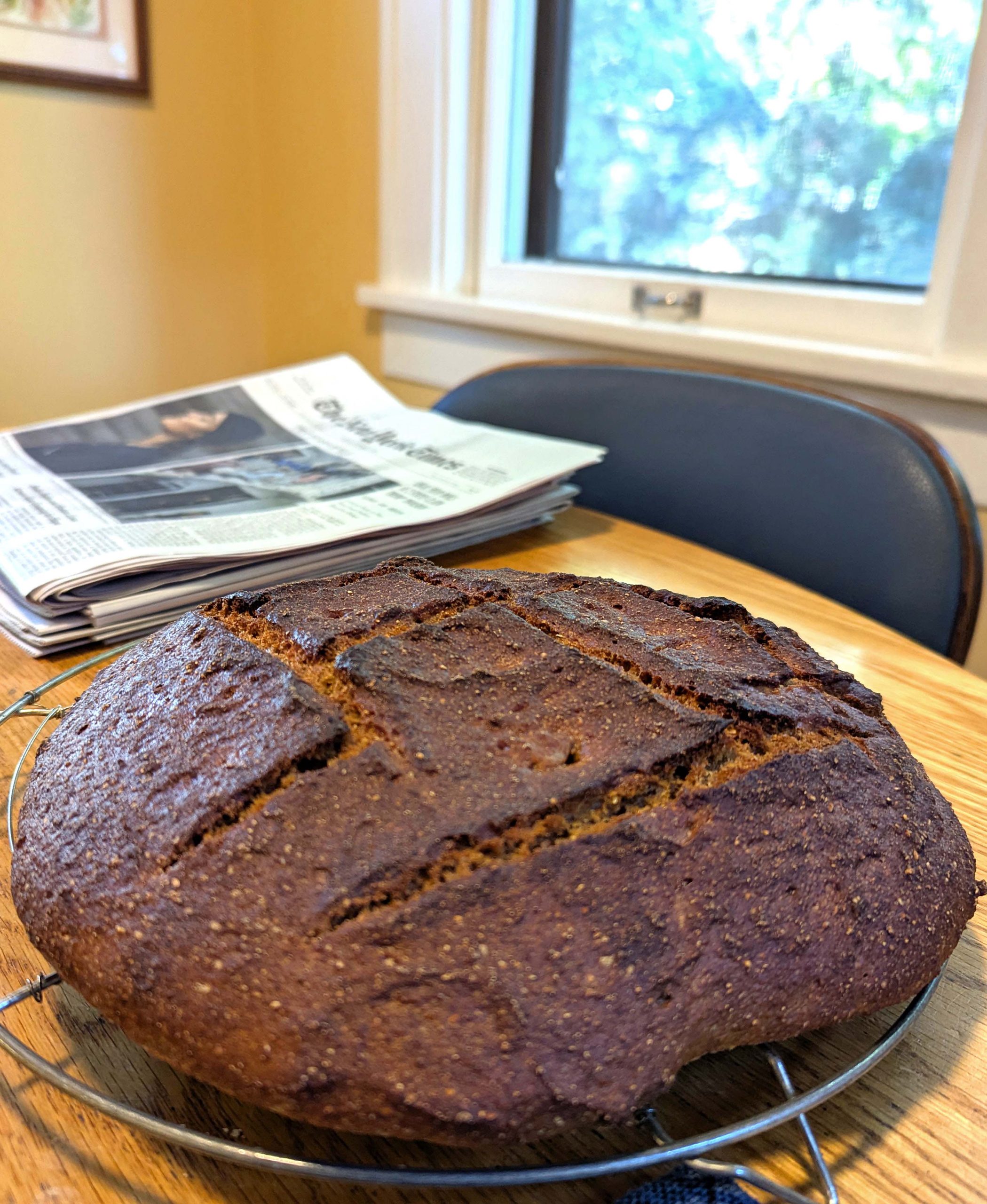
Philosopher Henry David Thoreau was an environmentalist and early naturalist. In 1845 he built a tiny one-room cabin on the shores of Walden Pond in Concord, Massachusetts, to experiment with living simply and deliberately. There he grew and gathered his own food and wrote in his journals—living off the grid before there was a grid.

Thoreau even made his own bread. He was inspired by a traditional bread of the Indigenous people of his beloved Massachusetts: unleavened cornmeal flatbread. In his famous book Walden; or, Life in the Woods (1854), he wrote:

“… Bread I at first made of pure cornmeal and salt, genuine hoe-cakes [sometimes made on the blade of a hoe], which I baked before my fire out of doors on a shingle on the end of a stick of timber sawed off in building my house; but it was wont to get smoked and to have a piny flavor. I have tried flour also; but have at last found a mixture of rye and cornmeal most convenient and agreeable…”

Unleavened, smoked, and piny? Not too appealing. But reading about Thoreau’s recipe got me thinking about Anadama Bread, another New England specialty, which also includes cornmeal. And what could be lovelier in fall than the aroma of  Anadama warming your own soon-to-be chilly kitchen?

The version here is not quite so flat as Thoreau’s, but not as lofty as more typical Anadama bread, which generally calls for all-purpose flour, cornmeal, molasses, and milk or butter. It is closely associated with New England, and Massachusetts in particular—possibly Rockport and Gloucester, two of my favorite towns in the world. The cornmeal lends great flavor; if you love it, like I do, you may also appreciate a Portuguese cornbread that appeared in The New Artisan Bread in Five Minutes a Day. A version of that recipe and a Portuguese fish stew to go with it is here on the website, and as it happens the Portuguese fish stew is also associated with Gloucester and coastal New England.

This Thoreau-inspired loaf is delicious, with a touch of warmth and sweetness from the molasses, a subtle crunch from the cornmeal, and the savory depth of rye. It makes what is perhaps my all-time favorite toast for breakfast, and freezes (after slicing) exceptionally well. Expect 2-inch (5 cm) high slices (keep scrolling here if you’re seeing a blank space).

If you’re new to my method, start with my basic loaf then check back here, where you’ll note I’m presenting this recipe as a 2-pound single loaf, rather than a big dough-batch for daily baking. That said, you can double the recipe and store the dough for up to five days. And though I’m jumping the gun, Anadama would be a great addition to the Thanksgiving table next month. Be aware that cornmeal and rye can conspire to make for a dry crumb, so I mixed this as a very wet dough that can’t be handled or shaped at all, and won’t make a tall sandwich loaf:

IngredientsVolume (U.S.)Weight (U.S.)Weight (metric)
All-purpose flour2 cups10 ounces280 grams
Rye flour1¼ cups5½ ounces160 grams
Cornmeal⅜ cup4¼ ounces120 grams
Coarse salt½ tablespoon0.3 ounce8 grams
Water, lukewarm1¾ cups14 oz400 grams
Molasses⅛ cup2.5 ounces70 grams
Granulated yeast½ tablespoon0.17 ounce5 grams

1.  Whisk together the flours, cornmeal, and salt in a 5-quart bowl, or, if you’re storing the dough, a lidded (not airtight) food container. Flavors will intensify with storage.

2.   Combine the water, molasses, and yeast, then mix the liquid with the dry ingredients, using a spoon, a food processor (with dough attachment), or a heavy-duty stand mixer (with dough hook). With dough this wet, the stand mixer is the easiest way to go (scrape down dry bits with a spatula as you mix).
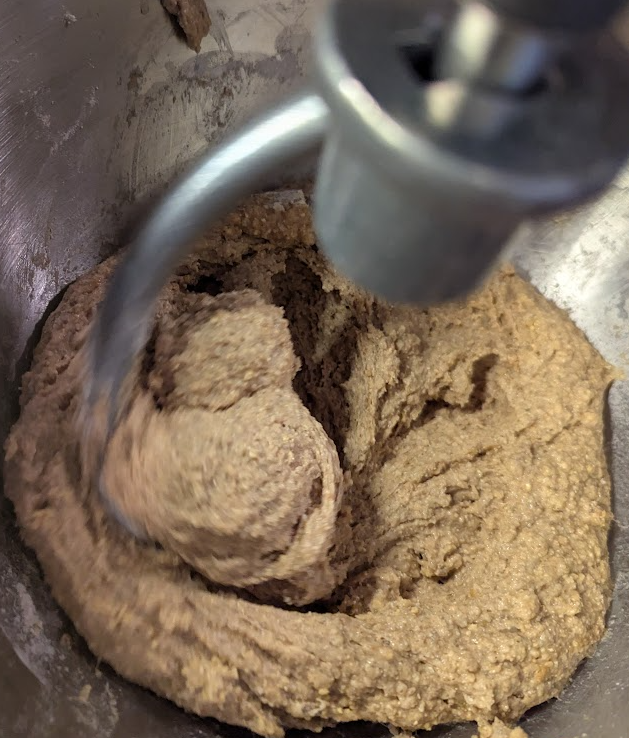
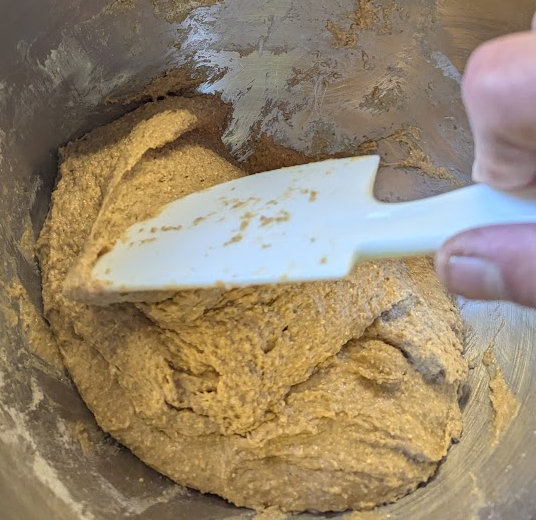
3. Use the spatula to pull the dough over itself to give the dough-mass some structure. This is hard to describe but you’ll see what I mean in these pictures:
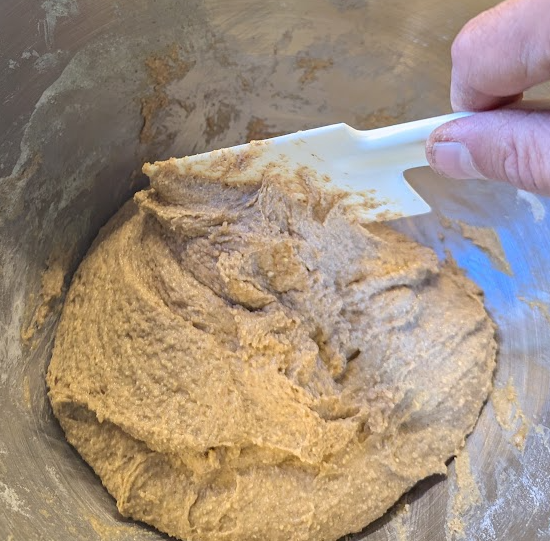
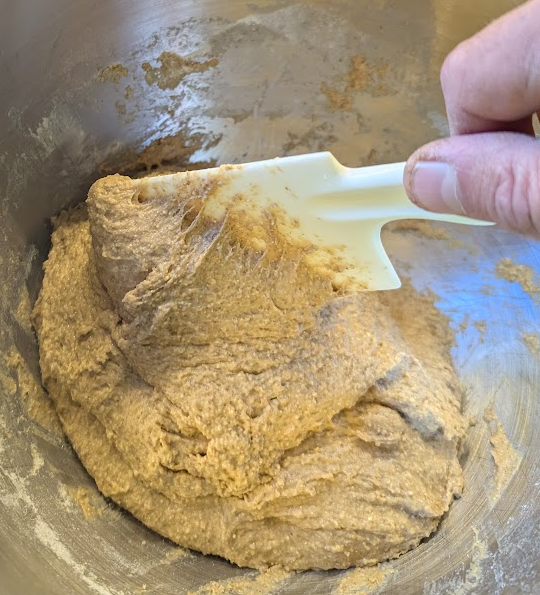
4.   Cover (not airtight), and allow the dough to rest at room temperature until it rises and collapses (or flattens on top), approximately 2 hours (it should double; go longer if it hasn’t). If you refrigerate the dough overnight, the flavor will intensify, and it can be refrigerated for up to 5 days (beyond that and you’ll find the results too dense).

5. Scrape the dough, doing your best to preserve a round shape, onto a heavy-gauge baking sheet prepared with parchment paper, allowing it to settle by itself into a flat-ish round. Do not try to flour and handle this very wet dough.
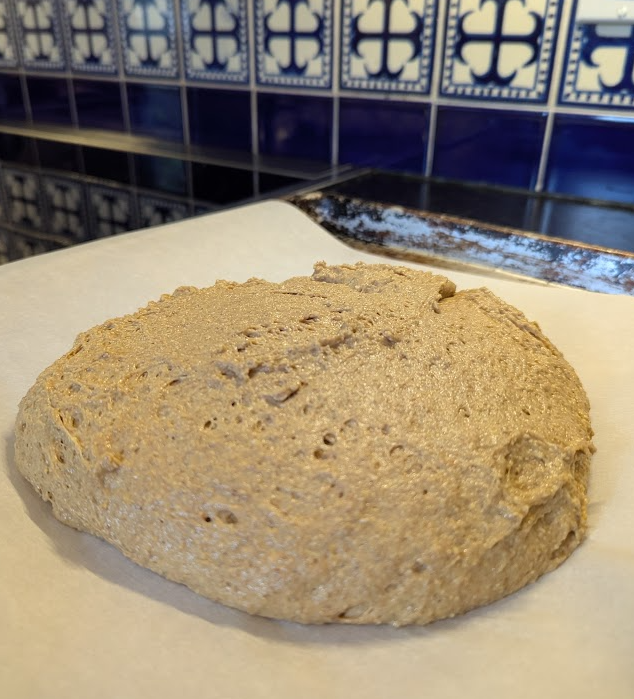
6.   Allow to rest, loosely covered with an overturned bowl for 90 minutes.

7.   Thirty minutes before baking time, preheat the oven to 450°F. Place an empty metal broiler tray on any other rack that won’t interfere with the rising bread.

8.   Just before baking, use a pastry brush to paint the top crust with water. Slash the loaf with 1⁄2-inch-deep crossed cuts, using a serrated bread knife.
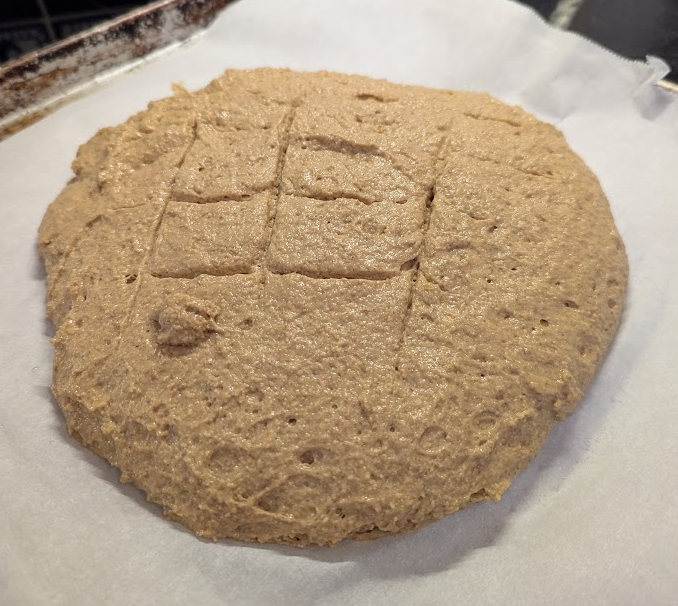
9.   Slide the loaf directly onto the hot stone (or place the silicone mat or cookie sheet on the stone if you used one). Pour 1 cup of hot tap water into the broiler tray, and quickly close the oven door (if your oven window isn’t made of tempered glass, cover the window with a towel and remove before closing the oven door). Bake for about 30 to 35 minutes, until richly browned and firm, checking at the midway point for over-browning and decrease to 425F if needed. Carefully remove the parchment and bake the loaf directly on an oven rack half-way through baking. Because of the molasses, the crust will be very dark when the loaf is baked through.

10. Allow the bread to cool on a rack before slicing. You should end up with slices that are about 2 inches tall (5 cm).
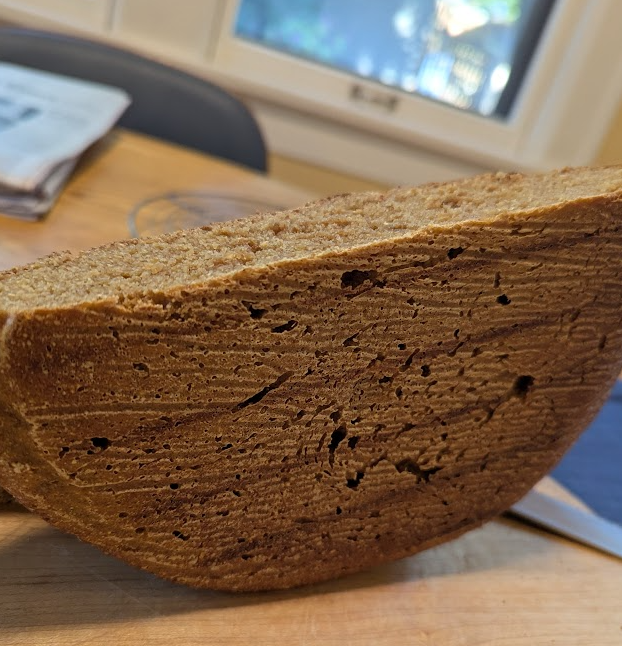
Thoreau might approve. Here he is in my backyard, not exactly the natural connection he was looking for, but still...

Subscribe to my newsletter and hear about every new post: click here.

Note: BreadIn5.com is reader supported. When you buy through links on the site, BreadIn5 LLC earns commissions.
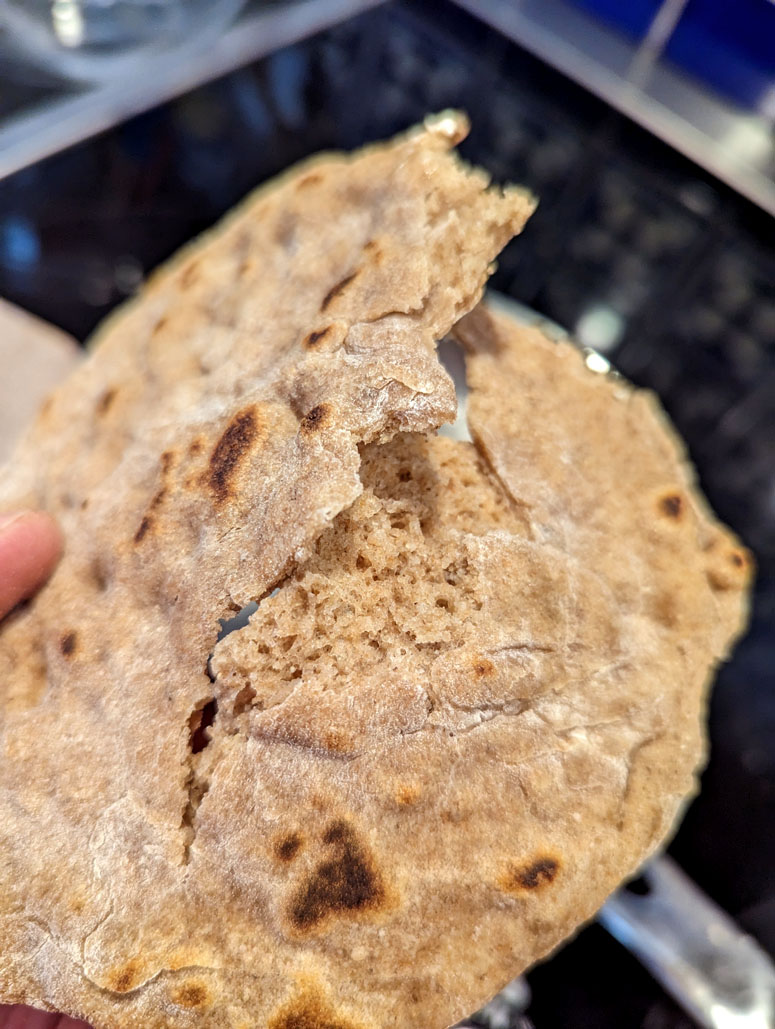
Stovetop bread, on induction, electric, or gas — with a video!

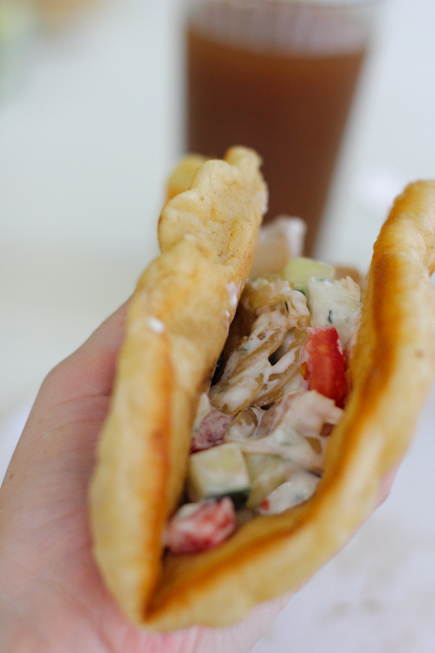
In all my books, I call this fast and delicious flatbread “naan,” which is a specialty from India, but truth be told, it isn’t really naan, because the authentic article is made in a massive ceramic oven (“tandoor”), and the flatbreads are slapped onto the sides of its huge bowl-shaped surface and cooked over charcoal. My version is from page 260 of “The New Artisan Bread in Five … .” For those of us who don’t have a tandoor at home, we can still make chewy, fragrant flatbreads in a skillet, right on the stovetop. I’ve done it on gas, electric, and induction stovetops, but I’m going to put in a brief plug for induction, because I recently got one, and I’m in love with it. It’s instant-on, rapidly responsive, and very, very stingy with energy and carbon emissions. This is part of the electric transition that is probably in all our futures and that my family has started trying to make. Induction is nothing like traditional radiant electric stovetops — it’s actually better than gas, by a lot, despite persuasive advertising from the gas industry, since the 1930s which brought us the wacky expression, “Now you’re cookin’ with gas!” I was a gas diehard … until I tried induction at a friend’s house. Melissa Clark had a great article on this last year if you’re interested in learning more. But this bread, which doesn’t care what kind of stovetop you use, is fast and delicious, and stovetop cooking doesn’t heat up your kitchen like an oven, so it’s a great choice for the upcoming warm weather (someday soon, fingers crossed, even here in Minnesota). Read on …

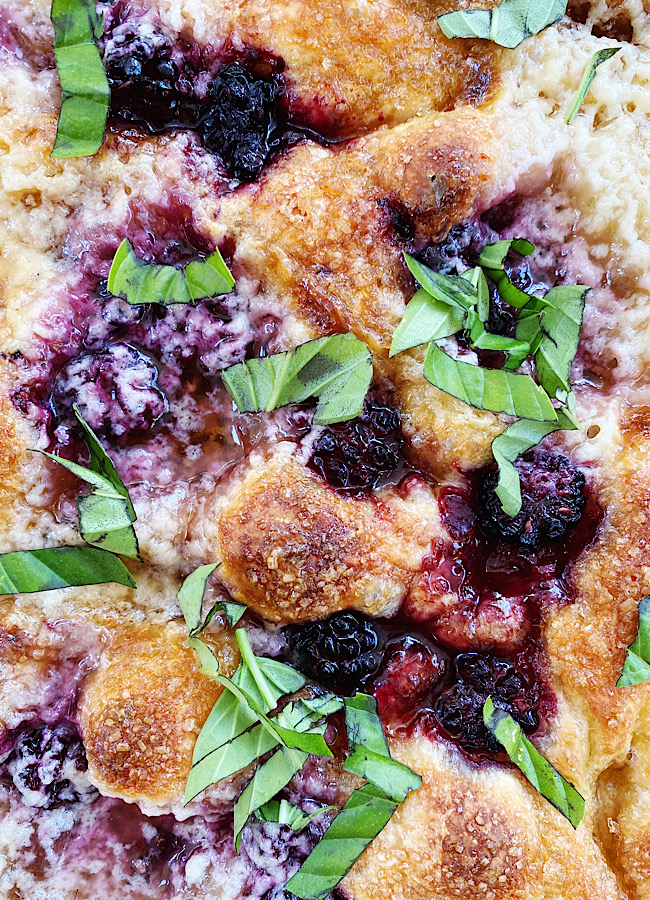
Blackberry Mascarpone Focaccia

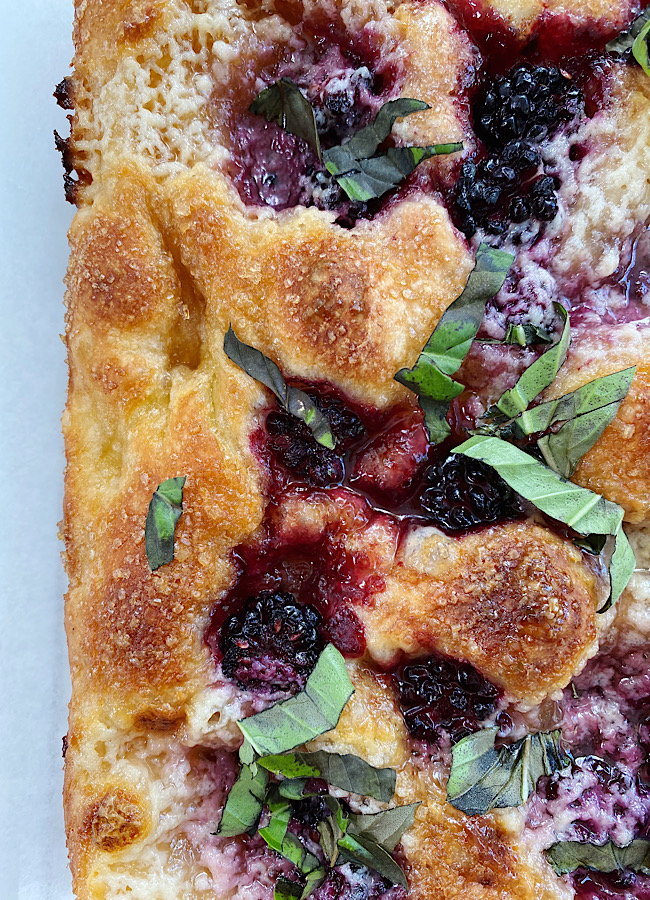
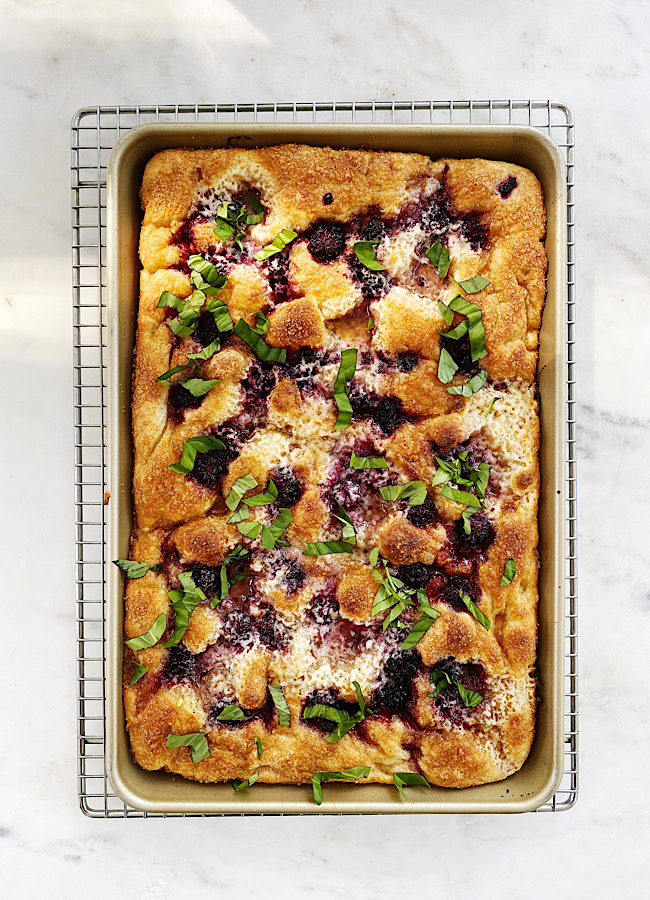
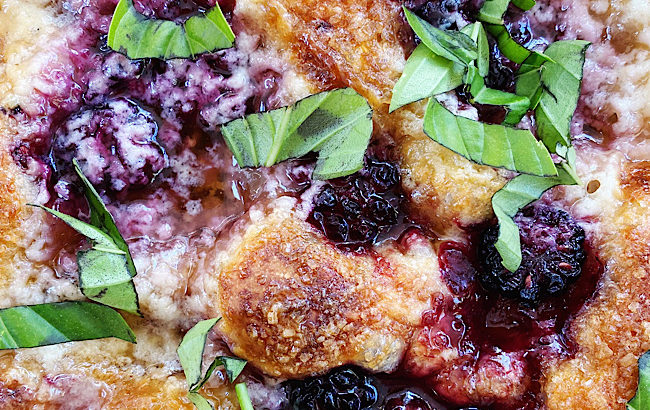
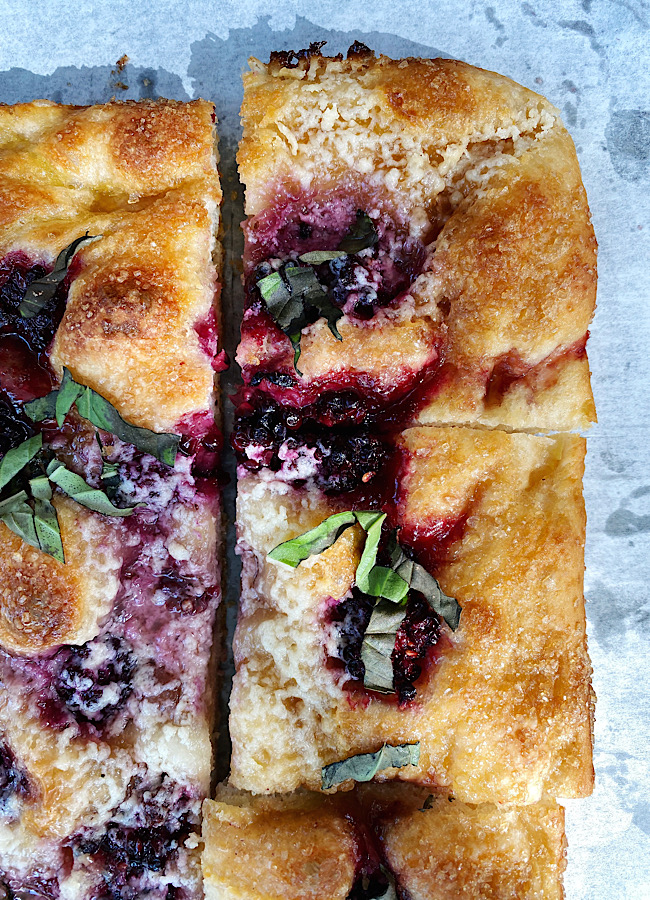
Blackberry Mascarpone Focaccia with Basil

We wanted to sneak in some summer berries before apples and pumpkin take center stage (and also take over the internet). This delicious focaccia bread is based on a recipe from Edd Kimber’s beautiful new cookbook, One Tin Bakes; his version uses fragolina grapes and rosemary. But I had blackberries in my fridge that needed to be used, some leftover Master dough, and my basil plant is currently larger than life, so Blackberry Basil Focaccia was born.

This focaccia is sweet: it’s dolloped with mascarpone and sprinkled with sugar, and the results are amazing. You will want to eat this the day it’s made, and I highly recommend digging in while it still slightly warm.

Blackberry Mascarpone Focaccia with Basil

Inspired by Edd Kimber’s One Tin Bakes

For the mascarpone topping

1/2 cup [4 ounces] Mascarpone

1 tablespoon granulated sugar

1/2 teaspoon pure vanilla extract

In a small bowl, mix the mascarpone, sugar, and vanilla together until combined.

For the focaccia

1 1/4 pounds dough, Master recipe, from New Artisan Bread in Five

4 tablespoons olive oil, divided

1 cup blackberries, chopped

4 tablespoons turbinado sugar

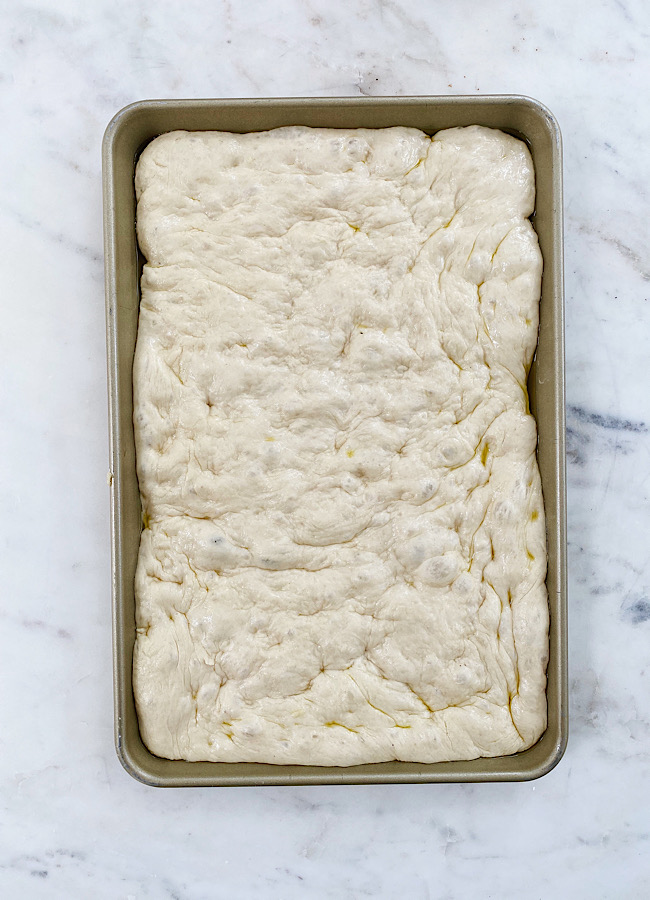
Pour two tablespoons of olive oil into a quarter sheet pan (a 9 x 13 pan will work, too) and use a pastry brush or your fingers to to rub it all over the base and up the sides of the pan. Place the dough into the pan, coating the bottom with oil, then turn the dough over so that both sides are coated in oil. Using your fingertips, gently spread the dough into the pan in an even layer. If the dough resists, let it rest a few minutes and try again, until the dough is nestled into the pan and into the corners. Lightly cover with plastic wrap and let the dough rise until doubled in size, about 1 hour.

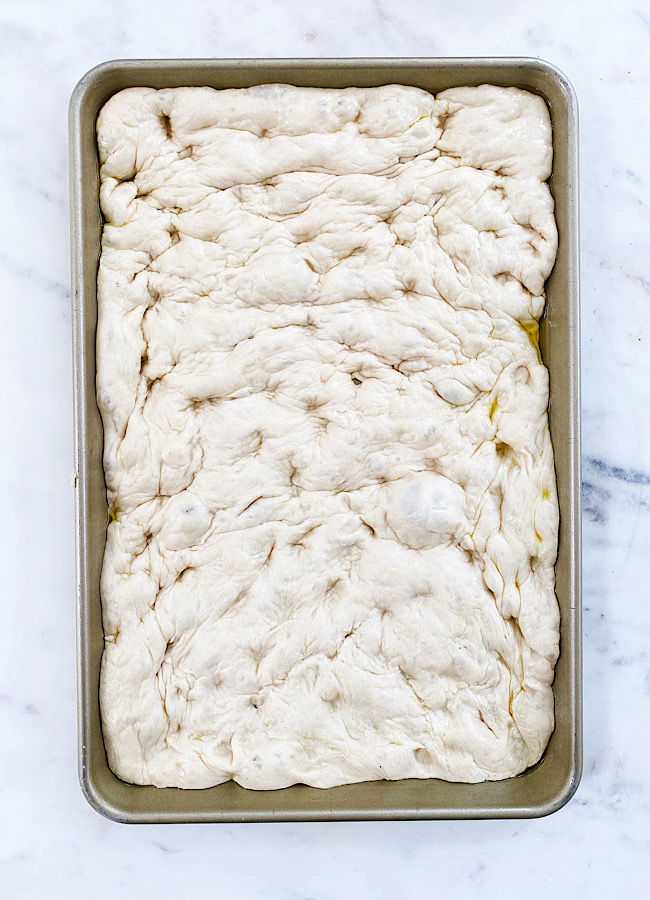
Adjust an oven rack to the middle position and preheat the oven to 425F. Gently dimple the dough with your fingertips.

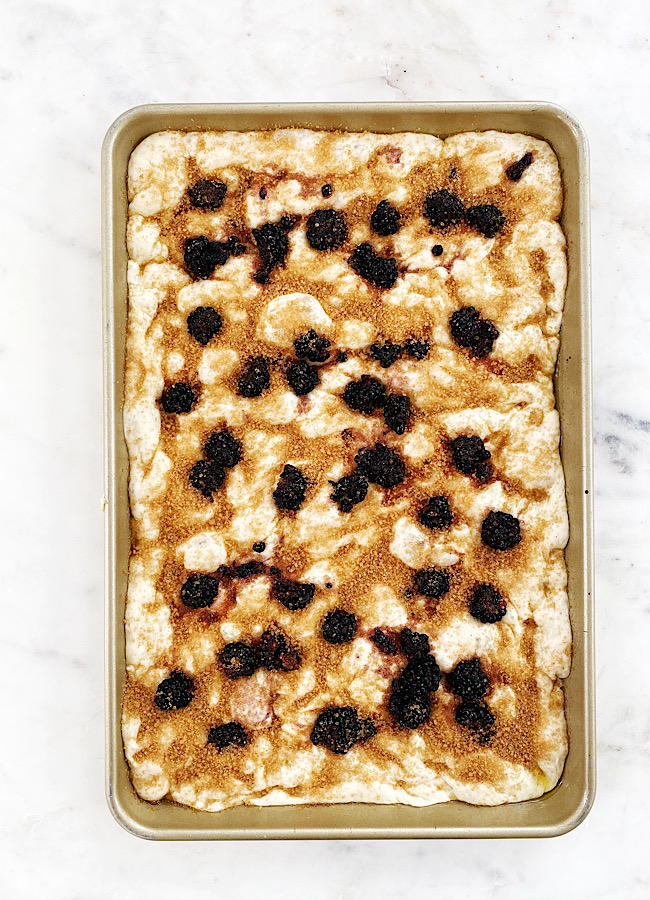
Scatter the blackberries evenly over the dough, then sprinkle the turbinado sugar over the top (it will look like too much sugar).

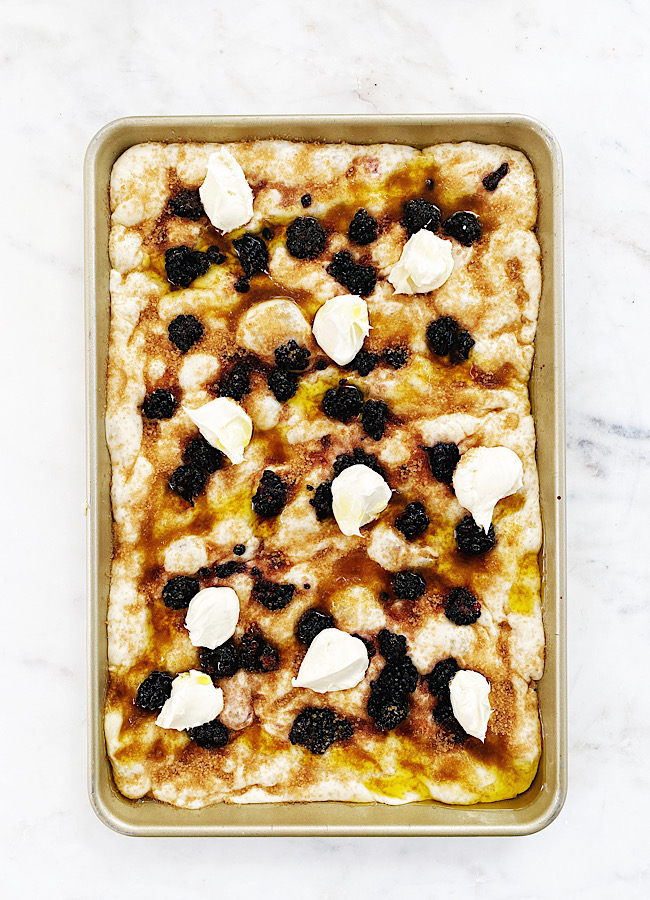
Dollop the mascarpone mixture over the dough, and then drizzle with the remaining 2 tablespoons of olive oil.

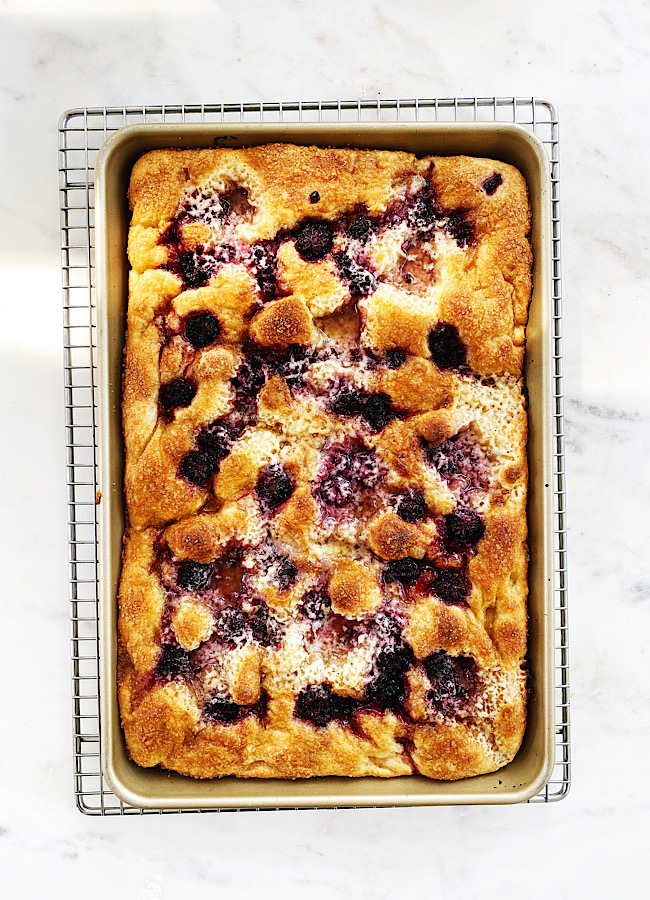
Bake the bread for 18 to 25 minutes, or until light golden.

Scatter the basil leaves over the top of the hot bread. Move the pan to a wire rack to cool for 5 minutes, then remove the focaccia from the pan and let cool on a wire rack (this helps it stay crisp).

Cut the bread into squares and serve. Best eaten the same day it’s made.

Note: BreadIn5.com is reader supported. When you buy through links on the site, BreadIn5 LLC earns commissions.
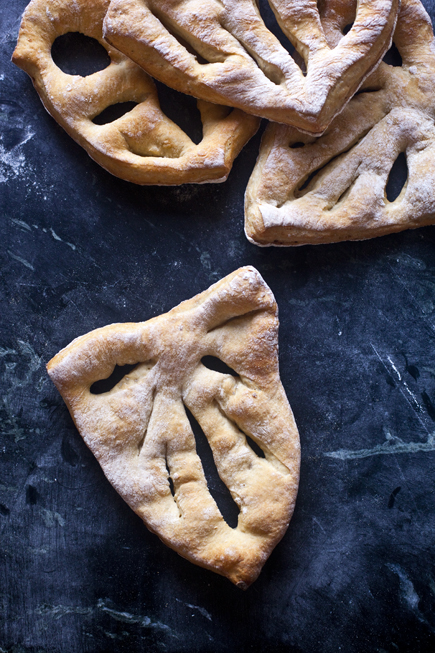
Garlic Fougasse

Garlic Fougasse | Artisan Bread in 5 Minutes a Day

This is the season of soup. It’s cold outside here in Minnesota and there’s nothing better than a cup of hot soup. Oh, and there’s all that leftover turkey to deal with and the beautiful butternut squash proliferation at the grocery store. To go with all that soup you’ll be making, there’s nothing better than homemade bread. This fougasse is a traditional Provencale French flatbread. It is both crispy, due to all that crusty surface and tender on the inside. It’s like a fancy breadstick. Because it is a flatbread, it is faster to make, since you have such a short resting time. To go with an aromatic soup, I added lots of chopped garlic to the bread dough and the result is fantastic. Read More

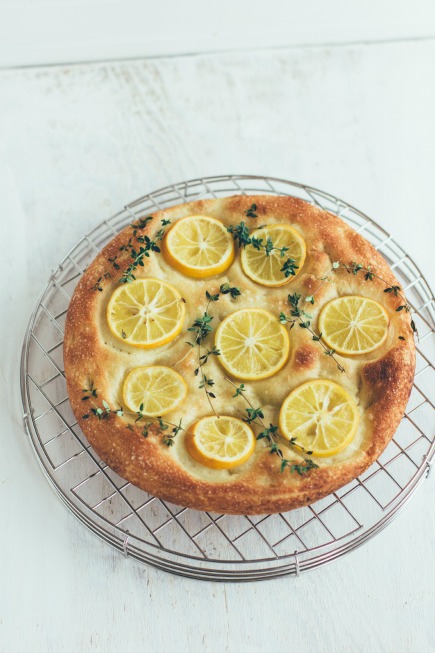
Focaccia Bread, Two Ways!

meyer lemon + thyme focaccia | bread in 5

Focaccia is terribly delicious; it’s a perfect accompaniment to pasta or soup, and it even makes great afternoon snack. While focaccia can be topped with all kinds of ingredients, we prefer ours rather simple: onions and rosemary scattered on an olive oil-dough flatbread. We even keep the ingredients light to promote nice browning, and the results are a well-flavored bread with a crisp crust. If you’re feeling more adventurous you can try a Meyer lemon-thyme version; Meyer lemons are much sweeter than regular lemons and are a delicious option. If you slice this kind of lemon very thinly, then yes, you can eat the peel.

Read More

The Flatbread Braid, New Video: How to Braid a Flat Circle

Braided

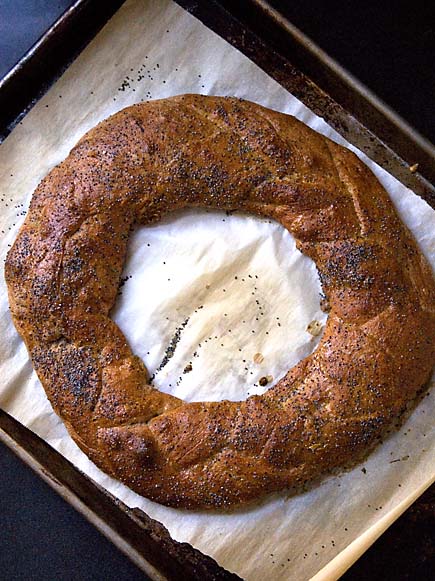
I’ve posted on a traditional braided loaf (made with peasant dough). I thought now might be a nice time to do a new video (it’s way at the bottom of this post), showing one of my favorite techniques, the flatbread braid. Flat or traditional tall, these techniques also work great with challah or brioche dough (but you need to bake those lower temp (350F) because of the egg and sweetener in the challah or brioche). As in the photo, you can turn around a straight braid to make a very festive ring, and I topped it with egg wash and poppy seeds. This dough is about 50/50 whole wheat and white flour, which is a wheatier version of the Light Whole Wheat (you don’t have to use the “old” dough). The 50/50 recipe appears in The New Artisan Bread in Five Minutes a Day

Read More

Olive Oil Flatbread with Asparagus and Caramelized Onion Spread

olive oil flatbread with asparagus and caramelized onion spread | bread in 5

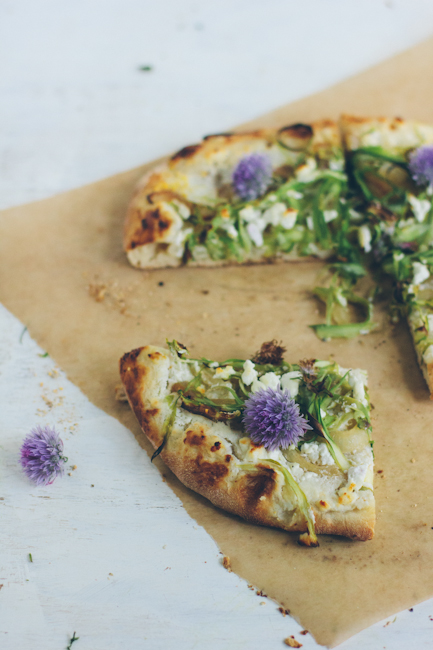
The asparagus season is short, and since we’re on the very tail end of it, working it into a flatbread seemed like a good idea. Technically this might just as easily be a pizza, since there is sauce, some cheese, and a heaping of vegetables. Either way, it’s a delicious dinner. The caramelized onion spread is sweet, and adds a nice backdrop of flavor. The asparagus is peeled into ribbons, and this technique helps them bake easily, leaving a tender bite and a subtle flavor. Goat cheese lends just a bit of tang, and if you happen to have chives growing in your garden, topping it all off with chive flowers makes a beautiful presentation.

Read More

Thanksgiving Leftovers Torta

Thanksgiving leftovers

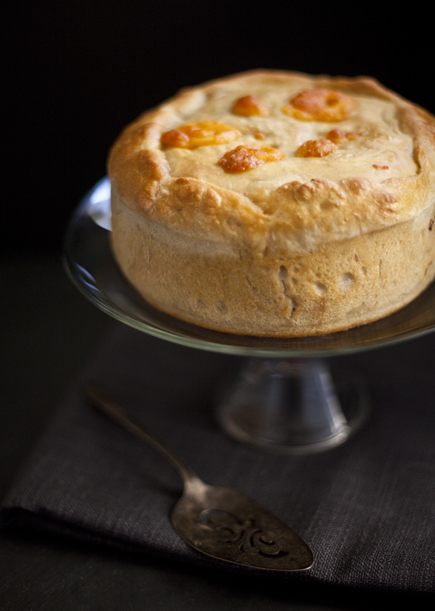
No matter how big your Thanksgiving feast is or how many people are gathered around your table, chances are there’s more leftovers than you know what to do with. Here is a way to use the extra turkey, stuffing, mashed potatoes, plus anything else that graced your holiday table and make it into something new. There’s an Italian Torta recipe in Artisan Pizza in Five, but why not swap out the layers for all those leftovers? It is tasty and gorgeous and goes together in a flash if you are cleaning out the fridge of all those half empty containers. Read More