Lemon-Poppyseed Mini-Brioches (with a couple of healthy tweaks)
4-paint-with-glaze.jpg

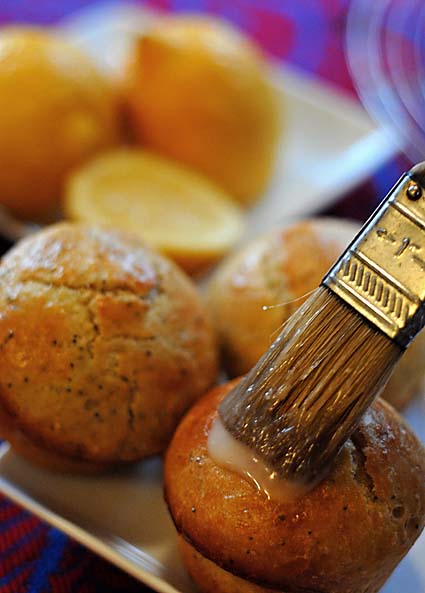
On Mondays, it’s my turn to pick up my older daughter from school, and then stop for tea and treats before her guitar lesson.  We’ve been doing this for six years, and I think I love the tradition as much as she does.  Our downtown coffee shop has great coffee and tea, but the baked goods leave a lot to be desired, especially by the time we roll in at 4:00pm.  There’s one exception– they have a lemon-poppyseed pound cake that is just terrific (or it would be, if it were fresh!).  I wondered if we could adapt the brioche from Artisan Bread in Five Minutes a Day to the bright fresh flavor of lemon and the crunchy texture of poppyseed, topped with a simple glaze.  They baked up perfectly in cupcake tins so if you’re inclined to call these cupcakes, go right ahead.  And I snuck in two healthy tweaks to the recipe:  canola oil instead of butter, and even a little whole grain.  Read More
Instant Gratification- the Indian flatbread Naan!

Naan Indian Flatbread Recipe | Artisan Bread in Five Minutes a Day

Also, see a video of this method for naan. The video shows an outdoor camping stove, but it works the same way inside on your gas, electric, or induction range…

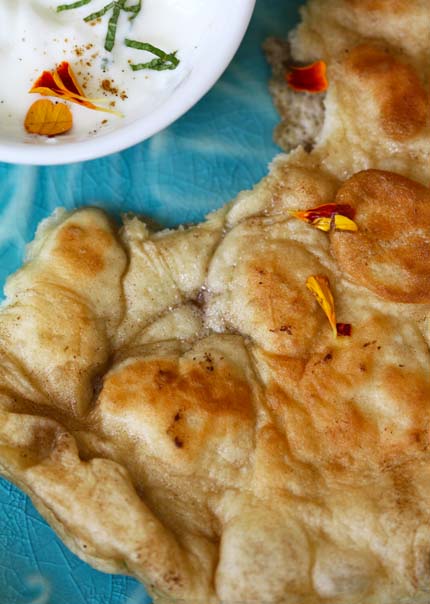
This is the fastest bread in the book and naan is absolutely delicious and it takes no forethought. The traditional Indian flatbread is made in a blazing hot tandoor oven and then brushed with melted ghee (clarified butter). We assumed that most of our readers would not have a tandoor oven so we decided to make this in a cast iron pan on the stove top. We cook the dough in ghee or butter so that it has the same flavor as the traditional bread, with so much less work. This bread can be made using just about every dough in the book; spinach feta, whole wheat, master, olive, and herb–even brioche dough, which can be fried in butter, drizzled with a little maple syrup and finished it with powdered sugar. It was just like the fried dough at the State Fair and only took a couple of minutes. Read More

Baking Bread in a Closed Clay Pot (“Cloche”)– the best crust yet!

cover-cloche-baked-boule.jpg

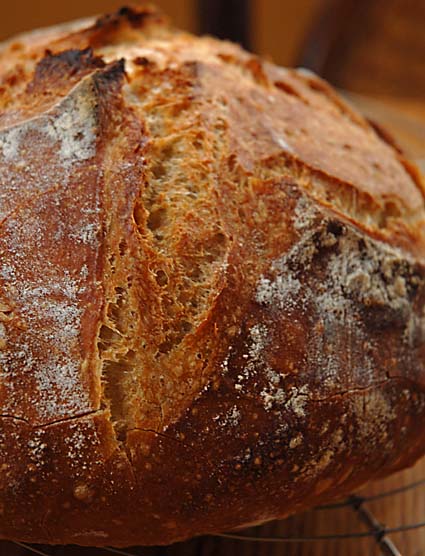
So many people have asked about baking dough inside a closed cast-iron pan (see a post on that). The cast-iron pan method is based on a much older method, where bread is baked inside a closed clay pot (or “cloche,” meaning “bell” in French).  Both methods depend on trapped steam from the dough to create a perfect crust, but the clay pot has the added benefit of being porous, so moisture is trapped, but also conducted away from the surface as the bread bakes.  I tested the Sassafras brand “La Cloche” product, and I’m very impressed with the crust I’m getting –take a look at the picture above; this crust is thin and shatters when broken (the burned bits are perfect in artisan loaves; that’s how you know you’ve baked long enough).  Keep in mind that these crust results are hard to re-create with loaves very high in whole wheat (because of oils in the wheat’s germ).  The bread above is about 15% whole grains– it’s a light version of the Peasant Loaf on page 46 of the book.  Whole grain breads perform beautifully in “La Cloche,” but the crust tends to be softer and thicker.

For crust aficionados, I think the “La Cloche” results are a little better than what I get inside closed cast-iron.  I didn’t put these two methods in our first book, because we wanted to keep things as simple as possible.  But with results like these, they’re going into he second one (publication date is 10/13/09)! Read More

Baking Bread in a Dutch Oven!

dutch oven bread

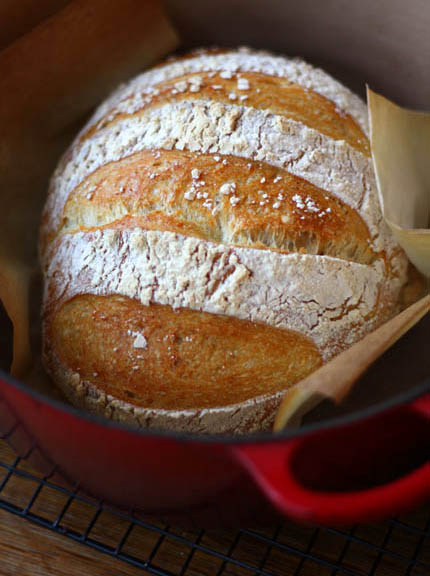
Here is yet another way to get a fabulous crust on your bread without using any steam in the oven. An unsophisticated disposable lasagna pan is an option but here’s another idea. Baking bread in a Dutch oven is a very old idea. All the iron-pot methods are based on the old European technique of baking inside a closed clay pot. Most people don’t have one of those, but enameled cast-iron pots are readily available—and they trap all of the internal moisture in the dough and that creates the steam you need to get a crisp and shiny crust. It really is fantastic and it works perfectly with our stored doughs from the book. Read More

Kaiser Roll answers…

Well, we had over 90 responses, and they fell into four categories:

1.  Buy yourself a “Kaiser Stamp,” which imprints the tops of round rolls with the Kaiser pattern.

2.  “Klopping,” the traditional method of folding and pressing (“klopping” refers to the karate-chop like action to make the seal).  Very difficult to achieve with our wet dough; I still haven’t managed a credible one.

3.  Grouping small balls of dough together.  Not really a Kaiser effect, but a great result.

4.  Knotting a rope of dough.  Really more of a “garlic knot” idea (see https://artisanbreadinfive.com/?p=202)

Who Can Fix My Kaiser Rolls?

kaisers-cover.jpg

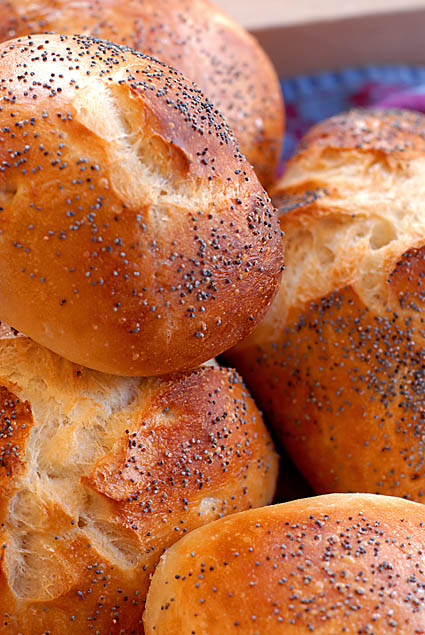
OK, I’m pretty happy with this photo, but… well, they aren’t really Kaiser Rolls.  I was on a “roll” from last week (sorry), when I thought my Brotchen were more than passable.  So I wanted to re-create another German roll style– the famous 5-petal Kaiser roll.  I have to say that even though the picture is pretty, the rolls didn’t retain the 5-petal shape that defines the Kaiser roll– it ended up as just a round, though beautiful and tasty roll.

And so fellow bakers, I turn to you for help!  What did I do wrong?  Please make suggestions that help me perfect this beast… Read More

German-Style Rolls: Brotchen (the crusty secret is an egg white glaze)

cover-brotchen.jpg

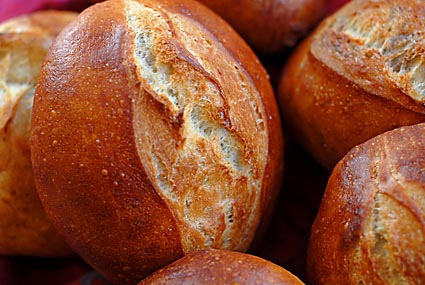
Many people have been writing to ask for German-style hard rolls.  The most common are Brotchen (little breads). They’re made from egg white-enriched white dough, and brushed with more egg white before baking at high temperature with steam. In the book, I concentrated on French-style crust techniques, which tend not to use egg white for high-temperature crisp crusts on lean breads. Turns out that the egg white creates an incredible crust and crumb.  Read More

Fresh Pita – the fastest bread in the land!

pita

(photo by Mark Luinenburg)

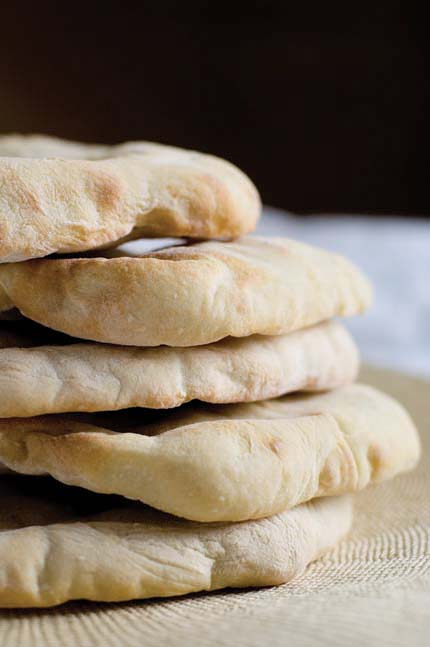
Pita bread is a simple, unadorned flatbread that dates back to antiquity. You simply roll out your favorite non-enriched dough as thin as possible and bake it on a hot stone. There is no resting time or other ingredients to prepare, so you can have it in a matter of moments. Despite its simplicity pita is one of the tastiest breads around. Perhaps it is all of the surface area and the soft chewy crumb? During the winter, this is great on a hot baking stone in the oven (without steam), but in the summer you can do it on the grill, directly on the grate.

Read More