Baking Stones for Pizza and Bread: Some Aren’t Stones at All
… some of them are metal, so read on.
Readers have been asking me about baking stones for holiday gifts, which I heartily endorse, so here’s my rundown of the options. Baking stones are sometimes sold as “pizza” stones, but no matter how they’re labeled, they’re great for freeform loaf breads as well.
My Top Pick: Ceramic
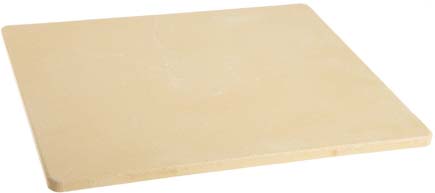
My personal favorite for a ceramic stone, when I’m making more than one bread or pizza, is a large rectangle, so there’s little chance of stray ingredients going overboard and burning on the bottom of your oven:
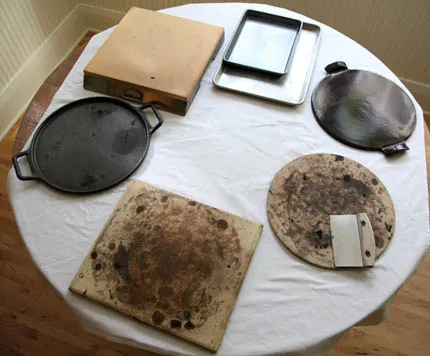
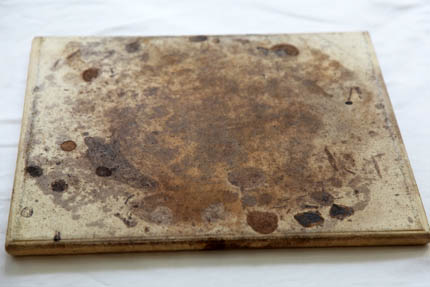
1. The Old Stone brand 14-Inch by 16-Inch baking stone. Note that none of the ceramic stone manufacturers guarantee their product against eventual cracking, but my Old Stone is over 20 years old and still going strong. It’s heavy and a half-inch thick, so it’s got lots of heat mass, producing a great crust, as long as it is properly preheated. I prefer a 40-minute preheat with a stone this thick, or even an hour. And because of the large size, you can bake multiple loaves or small pizzas and nothing falls off the edge. Old Stone also makes a 16-inch round version and it’s considerably lighter. Note: I’ve avoided the Pampered Chef ceramic stones because readers have written to say that they’re prone to cracking and I had the same experience with a borrowed one (awkward).
… on to a couple of metal options:
My Top Pick: Metal
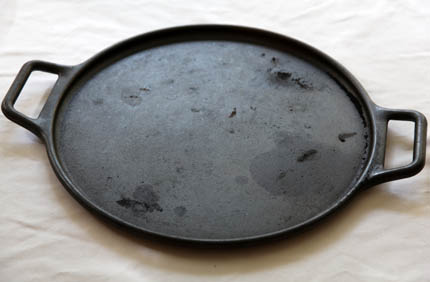
2. When I’m making a single bread or pizza, I prefer using lighter, pre-seasoned cast-iron. The Lodge Cast-Iron 14-Inch Pizza Pan is virtually crack-proof, unlike thin ceramic stones (not the Old Stone above). Cast-iron has different properties so it can preheat in 20 minutes and still create a crispy, caramel-colored bottom crust (your oven’s result may vary, so experiment to be sure the short preheat is working for you). It can even be preheated, at least partially, on the stovetop! Because iron conducts heat fast, it also cools off quicker.
Splurge Pick
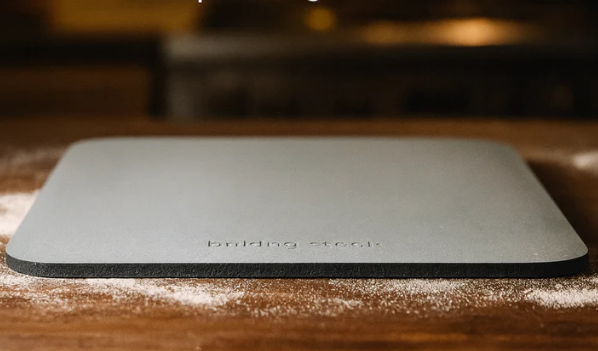
3. Another indestructible non-ceramic “stone” is the Baking Steel (its actual brand name). Like the Old Stone ceramic above, it’s large, so it prevents ingredients from going overboard. It works well, but it’s pricey:
Budget Pick
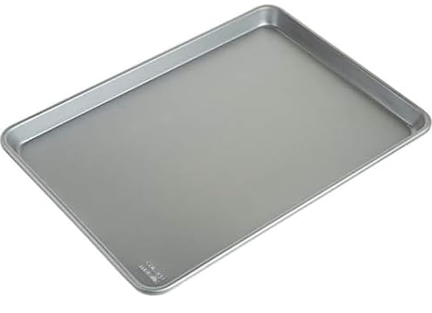
4. If you’re not ready to invest in a pizza/baking stone, heavy-gauge baking pans are a reasonable option. I like the uncoated Chicago Metallic pan, and though you won’t get as crisp a crust, it’s great for newbie bakers and especially good if you’re in a hurry (quick preheat). Preheat the pan and put the bread or pizza (well-dusted) directly onto it, without parchment or Silpat to get the crispest crust. If you use parchment or a Silpat be sure to remove it for the last few minutes of baking to crisp up the bottom crust (watch for manufacturers’ recommendations on maximum allowable temperature). You can also take the bread or pizza off the pan and crisp up the crust directly on an oven rack.
Reconsidered Pick
5. In the past I’ve recommended unglazed, food-safe terra cotta garden tiles, mostly because they’re easy to find and inexpensive. But they’re thin and small, so you have to push several together to make it work. The one time I tried this (at a demonstration; again, awkward), flour and cornmeal slipped between the tiles and burned on the bottom of the oven for a smoky mess, so I’ve since avoided them. If you’ve had better luck, let me know!
Also Nice to Have
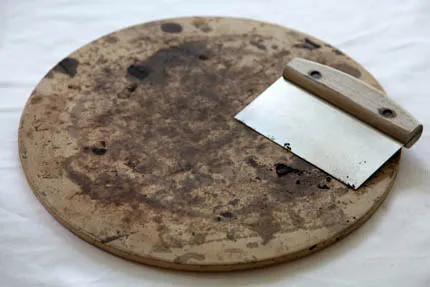
What if your giftee already has a baking stone? Bench Scrapers are excellent for cleaning ceramic stones. Use one to scrape off excess flour, cornmeal or cheese. AVOID SOAP or your stone may impart a soapy taste or odor. Just use hot water and let it dry slowly in a cool oven to avoid cracking. For the Lodge pre-seasoned cast-iron pan, scrape it if there’s visible thick, burned-on gunk. You can then brush it with hot soapy water, according to Lodge’s care instructions.
Food and pizza for thought, no? Happy December, everyone. More soon!
Note: BreadIn5.com is reader supported–when you buy through links on the site, BreadIn5 LLC earns commissions.